
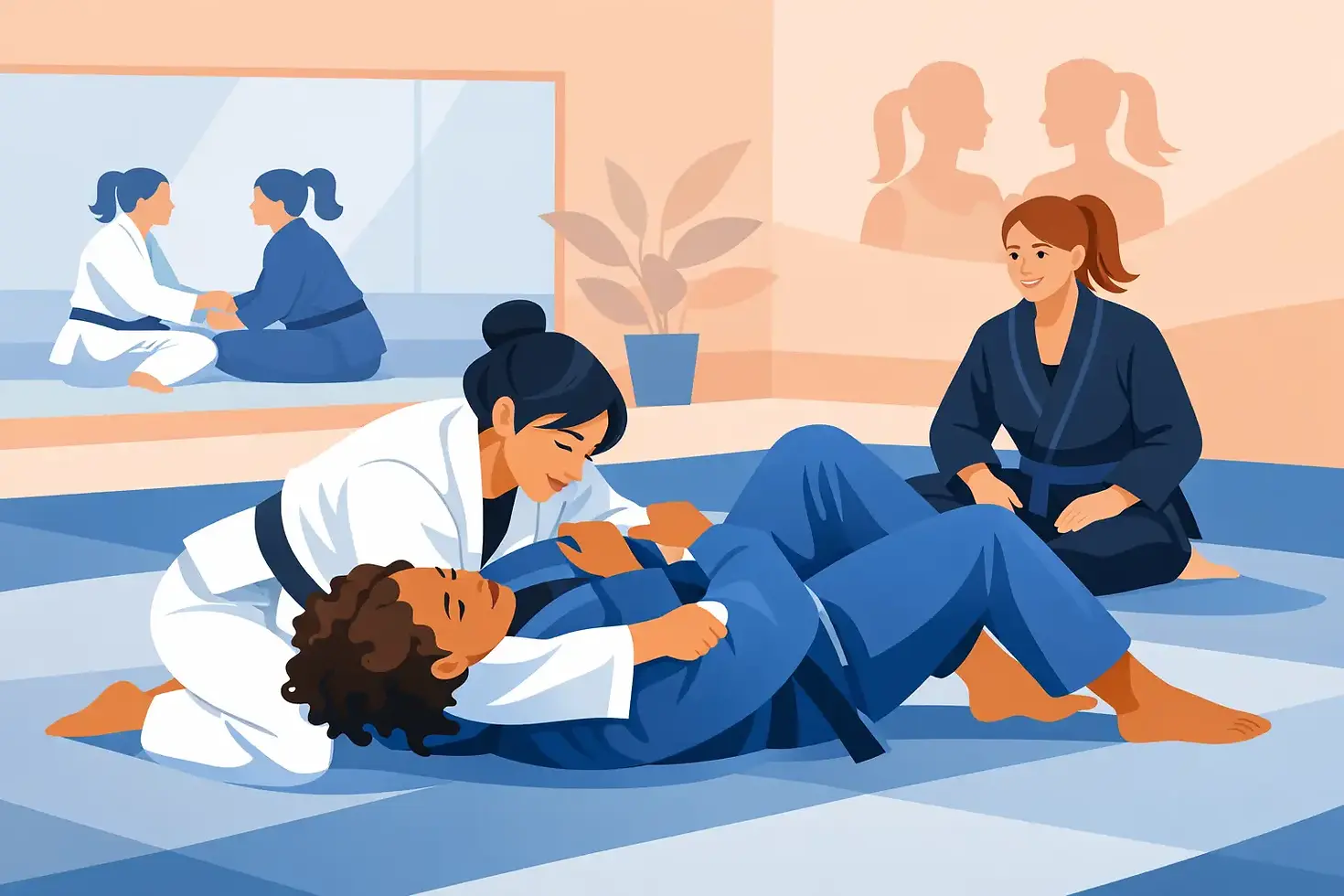
Why Women Only Jiu Jitsu Classes Work

Walking into your first grappling class can feel like the hardest part of training. Not the warm-up. Not the techniques. Not even sparring. For many women, the biggest hurdle is simply stepping onto the mat in the first place. That is exactly why women only jiu jitsu classes matter. They create a structured place to start, build confidence, and learn real skills without the pressure that can come with a mixed room.
For some students, that pressure is physical. For others, it is social. Maybe you have never trained before and do not want your first class to feel like survival. Maybe you are coming in for self-defense and want time to get comfortable with close-contact training. Maybe you are athletic, competitive, and serious about improving, but you still want a room where questions get asked freely and no one feels like they need to prove they belong. Those are real reasons, and they deserve a real answer.
What women only jiu jitsu classes actually offer
A good class is not a watered-down version of Brazilian Jiu Jitsu. It is still technical training. You still learn positional control, escapes, submissions, movement, timing, and awareness under pressure. The difference is the training environment.
Women only jiu jitsu classes often give beginners a cleaner entry point into the sport. The pace can be more approachable in the early stages, not because the standards are lower, but because the instruction is focused on helping students understand what they are doing and why it works. That matters in Jiu Jitsu. Technique beats panic. Repetition builds confidence. A room that encourages both usually keeps students training longer.
That environment also helps with consistency. A lot of people think confidence comes first and then training follows. Usually it is the opposite. You show up, learn how to move, survive awkward first rounds, and slowly become harder to shake. The right room speeds that process up because it removes distractions and replaces them with structure.
Why this format helps beginners stay with it
Most adults do not quit martial arts because they are lazy. They quit because they feel lost, overwhelmed, or out of place. That is especially common in combat sports, where the learning curve is steep and the physical contact is immediate.
A women’s class can solve that problem early. Students get time to understand base, posture, framing, guard retention, and positional awareness before feeling like they have to keep up with a room full of more experienced partners. That foundation matters. Jiu Jitsu gets much more rewarding when you know how to stay safe, move with purpose, and recognize what is happening.
There is also a psychological benefit that people sometimes avoid saying out loud. Many women learn faster when they are not worried about being the only female in the room, being paired with someone much larger, or feeling self-conscious during close-contact drills. That is not a weakness. It is simply good coaching to recognize what helps students learn.
Self-defense is part of the appeal, but not the whole story
A lot of women start training because they want practical self-defense. That is a legitimate reason, and Jiu Jitsu gives you useful tools. You learn how to manage distance, break posture, escape bad positions, create frames, and stay calm when someone is trying to control you. Those are not abstract skills. They are physical, repeatable responses built through practice.
At the same time, the best women only jiu jitsu classes do not rely on fear-based messaging. Good training is not about making people paranoid. It is about making them more prepared. You are building timing, awareness, and decision-making under pressure. You are learning how to stay composed when things get uncomfortable.
That kind of training carries over outside the academy. Students often notice changes in posture, boundaries, and confidence long before they notice stripes or belts. They speak more directly. They carry themselves differently. They stop hesitating so much. That is one of the strongest arguments for training, and it has very little to do with appearances.
Women only jiu jitsu classes and mixed classes are not opposites
This is where nuance matters. Women only jiu jitsu classes are valuable on their own, but they can also be the front door to broader training. For many students, that is the ideal path.
A women’s class gives you a strong technical and emotional base. Once that base is there, mixed classes often become far less intimidating and much more productive. You know the positions. You understand the etiquette. You have already had live reps. Now you can expand your training pool and keep developing.
Some students stay primarily in women’s classes because that format fits their goals, schedule, or comfort level. Others use them as a launch point and begin training throughout the week in general BJJ classes as well. Neither approach is wrong. It depends on what you want out of training and where you are in the process.
A serious academy understands that. The goal is not to force everyone into the same lane. The goal is to build competent, confident students and give them a path to keep growing.
What to look for in a quality women’s program
Not every class with a women’s label is well built. Some are excellent. Some are just an extra slot on the schedule with no structure behind them. If you are evaluating a program, look at how it is coached.
Strong women only jiu jitsu classes have clear technical progressions. Beginners should be learning positional hierarchy, escapes, control, and basic submissions in a logical order. Classes should feel organized, not random. You want instruction that balances detail with repetition, because both matter.
Culture matters just as much. An ego-free room is not a soft room. It is a disciplined room where students can train hard, ask questions, and make mistakes without being dismissed. That kind of environment is especially important in beginner development. Students improve faster when they are coached, not tested every second.
You should also pay attention to whether the academy treats women’s training as a serious part of the program or as a side offering. When leadership values the class, it shows up in the instruction, the consistency, and the student experience.
The physical benefits are real, but the mental ones last longer
People often ask whether Jiu Jitsu is good for fitness, and the answer is yes. You will build endurance, coordination, grip strength, core strength, and body awareness. You will work hard. Even the warm-ups can humble people.
But the deeper benefit is composure. Jiu Jitsu teaches you how to think when you are tired, pinned, frustrated, or behind. That kind of pressure reveals a lot. Over time, it also builds resilience. You stop panicking so quickly. You stop quitting on positions just because they feel uncomfortable.
That shift tends to show up in everyday life. Stress at work feels more manageable. Difficult conversations feel less threatening. New challenges stop carrying the same weight. Training does not remove adversity. It changes how you meet it.
Who should try women only jiu jitsu classes
If you are a complete beginner, this format makes sense. If you have always wanted to train but felt hesitant about stepping into a combat sports gym, this format makes sense. If you are returning after time away and want a more focused re-entry, this format makes sense.
It also makes sense for women who want serious instruction without the usual barriers that keep people from starting. You do not need prior experience. You do not need to be in shape first. You do not need a fighter’s background. You need a willingness to learn and the discipline to keep showing up.
In Asheville and across Western North Carolina, more women are looking for martial arts training that is both practical and welcoming. That is a good sign. It means the standard is rising. It means people are looking for coaching, structure, and a team they can trust. At a place like Parabellum Jiu Jitsu MMA Academy, that trust is built through real instruction, proven leadership, and a culture that expects effort while supporting growth.
The first class may still feel uncomfortable. That is normal. New things usually do. But discomfort is not a stop sign. In the right room, it is the beginning of confidence, skill, and a version of yourself that moves with a lot more certainty.



Comments