
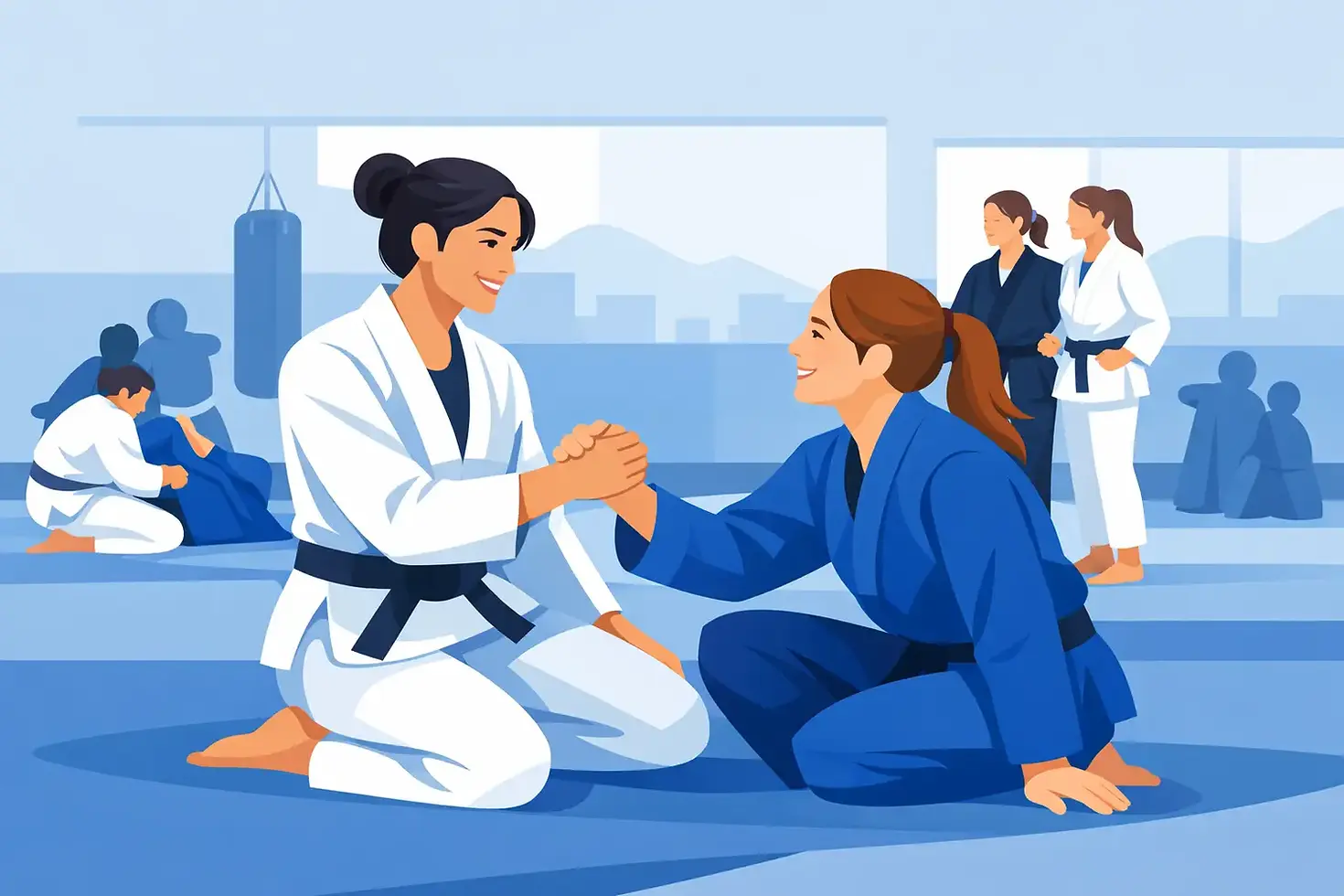
Can Women Train BJJ Safely? Yes, With the Right Gym

Walking into a Brazilian Jiu Jitsu class for the first time can feel intimidating, especially when you see people grappling hard, moving fast, and wearing colored belts. So, can women train BJJ safely? Yes - when the academy has qualified coaching, clear standards, respectful training partners, and a culture that treats safety as part of becoming better.
BJJ is a close-contact martial art. That is exactly why the quality of the room matters. A strong academy does not throw beginners into chaos and call it toughness. It teaches control first, builds skills progressively, and holds every student accountable for how they train.
Can Women Train BJJ Safely in a Co-Ed Class?
Women can train safely in co-ed BJJ classes, but safe does not mean every round feels easy or every partner is the right fit. Size, strength, experience, pace, and attitude all matter. Good coaching recognizes those realities instead of pretending they do not exist.
In a well-run class, students learn that the goal of training is not to overpower a teammate. The goal is to develop timing, posture, escapes, guard retention, pressure, submissions, and composure. A bigger or stronger partner may create a physical challenge, but technical training gives smaller athletes practical ways to frame, create space, manage distance, and defend themselves under pressure.
Co-ed training also offers real benefits. Women get experience working with many body types, energy levels, and styles. That variety builds adaptable technique and confidence. Still, no student should feel pressured to train with someone who is reckless, dismissive, or unable to control their movements. Choosing training partners is part of training intelligently.
Women-only Jiu Jitsu classes can be an excellent starting point as well. They offer a focused environment where students can learn foundational positions, ask questions freely, and gain comfort with the physical contact of grappling. For many women, that first layer of confidence makes the transition into broader classes feel far more natural.
What a Safe BJJ Academy Looks Like
Safety is not a poster on the wall. It shows up in how a coach runs warmups, pairs students, corrects bad behavior, and responds when someone taps.
A serious academy teaches tapping early and often. A tap is not failure. It is clear communication that a position or submission has reached its limit. Every student must release immediately when a partner taps, verbally signals, or is unable to continue safely. There is no place for “winning” a practice round by holding a submission too long or cranking harder than necessary.
Coaches should also set the pace for beginners. New students need positional drills and controlled rolling before they are expected to handle fast, unpredictable rounds. Starting with a specific situation - such as escaping side control or working from closed guard - gives a beginner a clear problem to solve without the confusion of trying to do everything at once.
Pay attention to the room during your trial class. Are experienced students helping new people learn, or trying to prove a point? Does the instructor notice mismatches in size and skill? Do people say hello, explain the drill, and check in before increasing intensity? Those details reveal more about a gym than any sales pitch.
At Parabellum Jiu Jitsu MMA Academy, the standard is simple: train with purpose, protect your partners, and leave your ego at the door. Hard training and safe training are not opposites. The best rooms demand both.
Smart Training Habits That Reduce Risk
BJJ has the same reality as any athletic pursuit: there is always some injury risk. Fingers get sore, muscles get strained, and awkward positions can happen. The goal is not to promise a risk-free sport. The goal is to reduce avoidable risk through good decisions, quality coaching, and honest communication.
Start at a sustainable pace. You do not need to roll like you are preparing for a title fight on day one. Focus on breathing, posture, basic movement, and recognizing when you are tense. A calmer athlete makes better technical choices and is less likely to panic in a bad position.
Tell your partner that you are new, returning from time away, or managing an injury. That is useful information, not an apology. A responsible partner will adjust the round, explain what is happening, and give you room to work. If someone ignores that conversation, stop the round and speak to the coach.
Tap before pain becomes an injury. This is especially important with joint locks and chokes. Waiting to see whether you can escape a fully locked submission can turn a learning moment into weeks off the mat. Good Jiu Jitsu requires grit, but grit is not the same thing as refusing to tap.
Keep your nails short, remove jewelry, wear clean training gear, and cover any cuts or skin irritation. Hygiene is not a minor detail in a close-contact sport. Clean mats, clean uniforms, and personal care protect the whole team.
Partner Choice Is a Safety Skill
You are allowed to be selective about who you train with. That applies to women, men, beginners, competitors, and black belts alike.
A good partner uses control. They can apply pressure without collapsing their weight carelessly, move with enough awareness to avoid collisions, and let a beginner attempt the technique instead of shutting down every exchange. They understand that rounds have different purposes. Sometimes the goal is technical work. Sometimes it is conditioning. Sometimes it is simply helping a new teammate survive their first week.
Be cautious around people who repeatedly ignore taps, move at maximum speed without control, make uncomfortable comments, or react poorly when corrected. One bad training partner does not mean BJJ is not for you. It means that person is not meeting the standard.
If you are unsure whom to ask, ask the instructor. Experienced coaches know the personalities and skill levels in the room. They can pair you with students who will challenge you without turning every round into a test of strength.
Building Confidence Without Pretending Size Does Not Matter
BJJ is valuable for women because it teaches leverage, positioning, and problem-solving in close range. It can help you understand how to stay calm when someone is crowding your space, how to create frames, how to get back to your feet, and how to use structure rather than panic.
That does not mean technique makes physical differences disappear. A larger, stronger attacker is still a serious threat, and no martial art can guarantee an outcome in a real-world confrontation. The practical value of BJJ is that it gives you better options, better awareness, and a more capable response when distance has closed.
For self-defense-minded students, the training should include more than sport positions. You should learn how to protect your head, manage distance, escape bad positions, stand up safely, and recognize when leaving is the best option. The strongest self-defense decision is often avoiding a fight altogether. But if physical contact happens, trained movement is better than freezing.
When to Modify or Take a Break
Training consistently is how you improve, but smart athletes know when to adjust. If you are pregnant, recovering from surgery, dealing with a significant injury, or managing a medical condition, speak with your healthcare professional and your coach before participating. The right modifications depend on the person, the stage of recovery, and the kind of training planned.
You can also protect your progress by choosing lighter rounds, drilling instead of rolling, sitting out a technique that aggravates an injury, or taking a rest day. Long-term progress is built by showing up for years, not by forcing one bad session.
The same mindset applies to mental comfort. Grappling is unfamiliar at first, and it can feel vulnerable. A professional instructor will respect boundaries, explain the purpose of drills, and help you build tolerance for pressure gradually. Confidence grows through repeated, controlled exposure - not being pushed past your limits without support.
The Right Room Changes Everything
A woman should not have to prove she belongs before she is treated like a teammate. She belongs when she steps onto the mat ready to learn. From there, the academy's job is to provide structure, coaching, accountability, and training partners who understand that everyone is responsible for the culture.
If you are considering BJJ in Asheville, look for a class where your questions are welcomed, the coaching is hands-on, and the intensity has a purpose. Start controlled, learn the fundamentals, communicate clearly, and give yourself time to grow. The mat can become one of the clearest places you will ever learn what you are capable of.


Comments