
What Age Can Kids Wrestle? A Parent’s Guide

A five-year-old does not need to know a single takedown to be ready for wrestling. What they need is the ability to listen for short periods, follow basic safety rules, handle physical play, and return after a frustrating moment. For parents asking what age can kids wrestle, the practical answer is that many children can start around ages 4 to 6, but readiness matters more than the number on a birthday cake.
Youth wrestling should not look like a miniature version of an adult fight camp. At the right academy, young students learn movement, balance, body awareness, and controlled contact in a structured environment. They build confidence through repetition, coaching, and the experience of doing hard things without being left to figure them out alone.
What Age Can Kids Wrestle Safely?
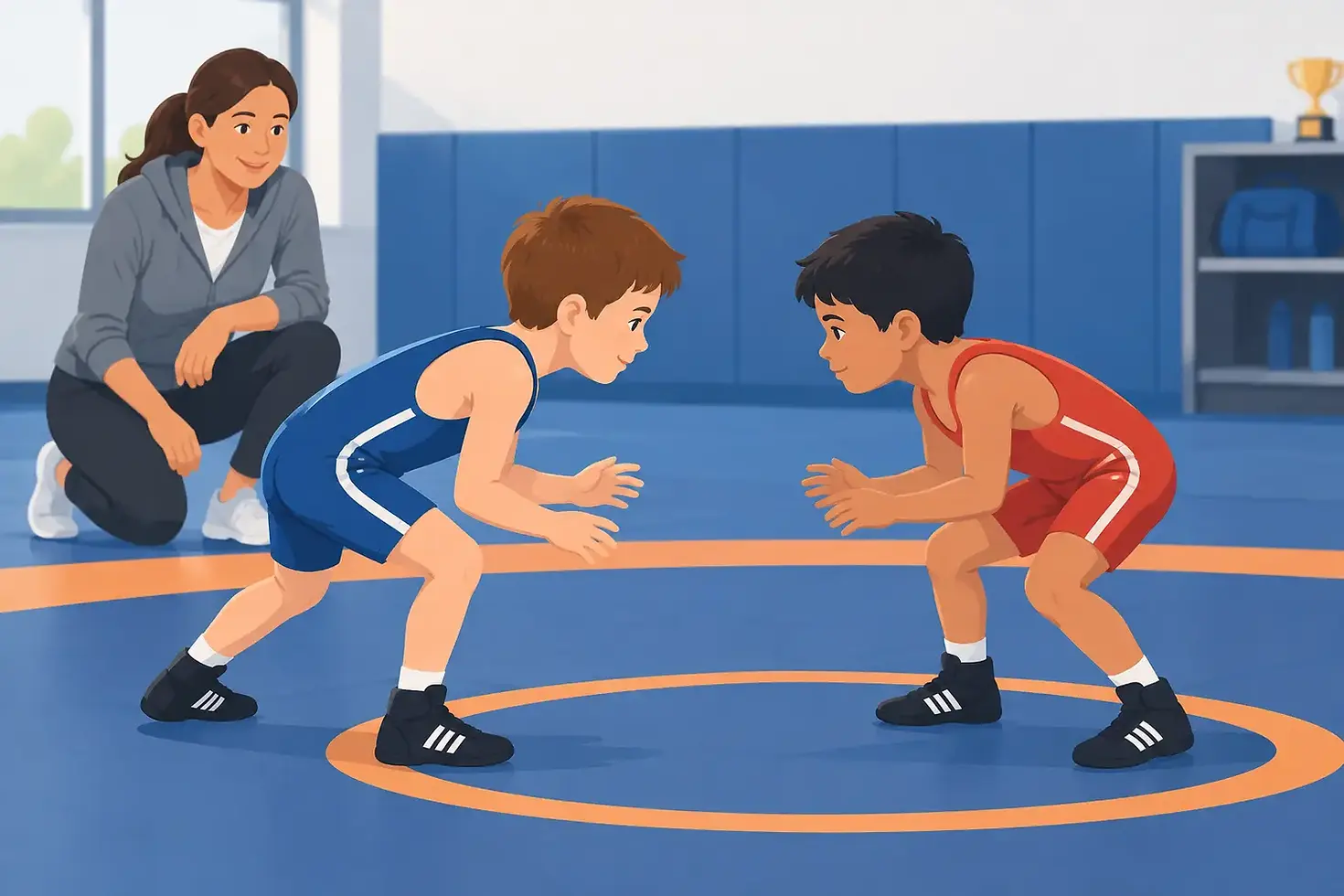
Most youth wrestling programs welcome children between ages 4 and 6 in an introductory class. At this stage, the goal is not to create a champion or pile on advanced technique. It is to introduce the foundations: stance, motion, safe falling, partner awareness, basic grips, and respectful training habits.
Some children are ready at four. Others will get more from starting at six or seven. A child who can stay engaged for a class, accept direction from a coach, and play safely with other kids is often ready to begin. A child who is still working through separation anxiety, has trouble with consistent directions, or becomes overwhelmed by close contact may benefit from waiting a few months or starting with a lower-pressure movement-based class.
There is no prize for rushing the process. Starting when a child is emotionally and physically ready creates a far better first experience than forcing a program that does not fit yet.
Readiness Matters More Than Athletic Talent
Parents sometimes assume their child needs to be naturally strong, coordinated, or aggressive before trying wrestling. That is not the standard. Wrestling is one of the places where children develop those qualities.
The better questions are simple: Can your child participate in a group? Can they keep their hands and body under control when excited? Are they willing to try again after making a mistake? Do they respond reasonably well to coaching?
A shy child can do extremely well in wrestling. So can the child with endless energy who needs a disciplined outlet. The sport gives both kids a clear job. They learn where to stand, how to move, when to go, and how to reset. Over time, that structure can carry into school, home, and other sports.
Competitive experience is not required. In fact, it should not be the first focus for most young wrestlers. Early success is measured by smaller wins: joining the warm-up without tears, learning to breakfall safely, shaking a partner’s hand, or staying composed after getting taken down.
What Young Kids Actually Learn in Wrestling Class
A quality youth program is built around age-appropriate progressions. Coaches do not hand a beginner a long list of techniques and expect perfect execution. They teach a few clear skills, create safe repetitions, and make sure each student understands the purpose behind the drill.
For younger children, classes commonly emphasize athletic movement and basic wrestling positions. Students learn to change levels, move in a stance, maintain balance, protect their head and neck, and use their hands without grabbing wildly. They also learn how to fall and roll in ways that reduce injury risk.
As children mature, training can become more technical. Older kids and teens may work on takedowns, escapes, rides, turns, chain wrestling, conditioning, and controlled live rounds. The intensity increases only when the student has developed the control, awareness, and technical base to handle it.
Wrestling also teaches a lesson many kids need: effort and outcome are not always the same thing. A child can work hard, lose a round, learn from the mistake, and come back sharper the next day. That is not a setback. That is resilience built in real time.
Is Wrestling Safe for Kids?
Wrestling is a contact sport, so honest parents should not be told that it is risk-free. Bumps, bruises, sore muscles, and occasional injuries can happen in any athletic program. The real question is whether the environment manages risk responsibly.
Safe youth wrestling depends on qualified coaching, appropriate partner matching, clean mats, structured supervision, and a culture where technique comes before ego. Beginners should not be thrown into hard live wrestling with larger or much more experienced students. They need coaching that teaches control before intensity.
Parents should also look for an academy that takes behavior seriously. Children need to understand that training partners are teammates, not targets. Tapping, stopping when told, respecting boundaries, and using controlled pressure are all non-negotiable habits. A tough program is not one where kids are allowed to be reckless. It is one where standards are high and safety is part of the standard.
At Parabellum Jiu Jitsu MMA Academy, youth development is treated as a long-term process. Students are coached to become capable, disciplined martial artists without skipping the fundamentals that keep training productive and safe.
Wrestling, Jiu Jitsu, or Both?
Many Asheville-area parents compare wrestling and Brazilian Jiu Jitsu because both build confidence through grappling. They overlap in valuable ways, but each brings something different to a child’s development.
Wrestling focuses heavily on takedowns, balance, control from top position, pressure, movement, and the ability to recover when an opponent is driving forward. It is fast, physical, and excellent for athletic development. Jiu Jitsu adds submissions, positional escapes, guard work, and a deeper range of problem-solving on the ground.
For a young child, either can be a strong starting point. The best choice often comes down to the coaching environment, the child’s personality, and which class they are excited to attend consistently. Some students thrive by training both over time. Wrestling gives them a powerful base for standing control, while Jiu Jitsu teaches patience and composure in ground exchanges.
The trade-off is schedule and recovery. A child does not need to train every night to progress. Two consistent classes each week can build tremendous skill, especially when the child is sleeping well, eating properly, and still enjoying school, family time, and other activities.
When Should Kids Start Competing?
A child can begin learning wrestling long before competition becomes necessary. For some kids, a local event at age 6 or 7 is a fun challenge. For others, waiting until age 9, 10, or later is the right move. Competition should support development, not define it.
Before entering a tournament, a young wrestler should understand basic rules, listen to a referee or coach, respond safely when the action stops, and handle both winning and losing without falling apart. They do not need to be perfect. They do need a foundation that makes the experience constructive.
Parents can help by keeping post-match conversations calm. Instead of asking only whether they won, ask what they tried, what felt difficult, and what they want to practice next. Kids often borrow their emotional response from the adults around them. If you treat a loss as information instead of failure, they are more likely to do the same.
Signs Your Child Is in the Right Program
The right youth wrestling program should feel organized from the moment class begins. Coaches should know students’ names, set clear expectations, and explain drills in language kids can understand. Students should be active, supervised, and challenged without being humiliated.
Watch how coaches correct mistakes. Strong coaching is direct, but it is not demeaning. Young athletes need accountability, yet they also need to believe they can improve. The best instructors demand focus while recognizing genuine effort.
You should also see growth beyond technique. A child who begins speaking more confidently, handling frustration better, standing taller, or showing more respect at home is gaining something that reaches far beyond the mat. Those changes rarely happen overnight, but consistent training compounds.
Give Them a Strong Start, Not a Perfect One
If your child is curious about wrestling, you do not need to wait until they are fearless, naturally athletic, or ready to compete. Start with a well-coached beginner class, let them learn the rhythm of training, and pay attention to how they respond over several weeks.
The goal is not to make childhood harder. It is to give kids a place where effort matters, discipline has a purpose, and confidence is earned one practice at a time.


Comments